
That box of VHS tapes in the closet is not getting any younger. If you have home movies, wedding footage, camcorder tapes, or old recordings you can no longer play, you may be wondering what is a video to digital converter and whether you actually need one. The short answer is yes – if your goal is to preserve analog video in a format you can watch, copy, and share today.
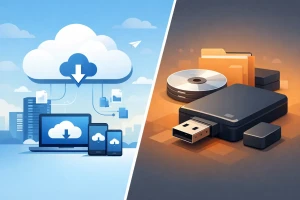
A video to digital converter is a device or service that takes video from an older analog source and turns it into a digital file. In practical terms, it captures what is stored on media like VHS tapes, VHS-C, Hi8, Video8, MiniDV, and other legacy formats, then converts that signal into something modern such as MP4 or another digital video format. Once converted, the video can be saved to a USB drive, hard drive, DVD, or cloud storage.
That sounds simple, but the details matter. The quality of the transfer depends on the condition of the tape, the playback equipment, the converter itself, and the way the video is captured. For families trying to protect irreplaceable memories, that difference can be bigger than most people expect.
What Is a Video to Digital Converter Used For?
Most people run into this need when they discover they still have tapes but no working VCR or camcorder. Even if they do have the old equipment, tapes can degrade over time. Colors can fade, audio can weaken, and physical damage like mold, stretching, or broken housings can make playback risky.
A video to digital converter is used to rescue those recordings before more quality is lost. It gives old footage a new life in a format that works with modern devices. Instead of relying on outdated machines, you can watch family videos on a computer, smart TV, tablet, or phone.
It is also useful for organization. Once your videos are digital, they are easier to label, duplicate for family members, and back up. That means fewer worries about a single tape being the only copy of your child’s first birthday or a recording of a loved one’s voice.
How a Video to Digital Converter Works
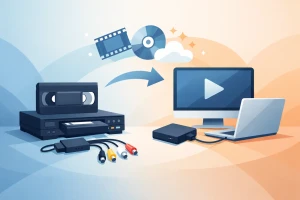
At a basic level, the process has three parts. First, the original tape is played back on the correct machine, such as a VCR or camcorder. Second, the analog video signal is sent into a converter. Third, the converter captures that signal and saves it as a digital file.
What makes this tricky is that analog media is not one-size-fits-all. A VHS tape needs different playback equipment than a Hi8 tape or MiniDV cassette. The converter must work with the source format, and the playback machine must be in good condition. Dirty tape heads, tracking issues, and worn belts can all affect the final result.
Some consumer converters are small plug-in devices that connect a VCR to a computer. Others are standalone systems that record directly to digital storage. Professional transfer setups often include higher-grade playback decks, signal correction tools, and software that helps stabilize the image during capture.
That is why two transfers from the same tape can look very different. The converter matters, but so does everything around it.
What Formats Can Be Converted?
When people ask what is a video to digital converter, they are usually thinking of VHS. VHS is common, but it is far from the only format that can be digitized.
Many converters and transfer services work with VHS, VHS-C, S-VHS, Video8, Hi8, Digital8, MiniDV, Betamax, and sometimes DVDs that need to be copied or recovered. Film formats such as 8mm and 16mm are a separate category and usually require a film transfer process rather than a standard video converter.
The right approach depends on what you have. A MiniDV tape, for example, is already digital in a technical sense, but it still needs the proper equipment to transfer the footage into a usable file. VHS and Hi8 are analog formats and need true analog-to-digital conversion.
This is one reason many households feel stuck. The tapes may be sitting safely in a drawer, but the equipment needed to access them disappeared years ago.
DIY Converter vs Professional Transfer
If you are deciding between buying a converter and using a service, it helps to think about more than cost alone.
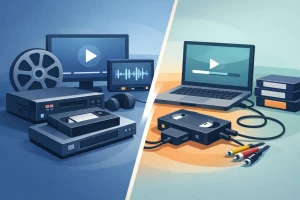
A do-it-yourself setup can work well if your tapes are in good shape, you already have a functioning playback device, and you feel comfortable troubleshooting software, cables, and recording settings. For a small batch of less critical tapes, this can be enough.
But there are trade-offs. Consumer-grade converters often produce inconsistent results, especially with unstable tapes. You may deal with audio sync problems, dropped frames, poor color, or a soft image. If the tape has damage, a home setup may not handle it well. In some cases, trying to play a deteriorating tape on an old machine can make the problem worse.
A professional service is usually the better fit when the footage matters deeply, the tapes are fragile, or you have multiple formats. Experienced transfer specialists use maintained playback equipment and know how to handle issues like tracking noise, tape jams, and aging media. They can also spot when a tape needs repair before playback.
For many families, the biggest benefit is peace of mind. You are not just buying a file. You are reducing the chance of losing something that cannot be recreated.
What to Look for in a Video to Digital Converter Service
Not all conversion services are equal, and this is where asking the right questions can save a lot of regret.
Start with format compatibility. Make sure the provider handles the exact media you have, whether that is VHS, camcorder tapes, or older specialty formats. Ask how the final files are delivered and whether you can receive them on a USB drive, external hard drive, or another preferred format.
Next, ask about tape condition. If your tapes are old, damaged, moldy, or have not been played in decades, you want a service that understands restoration and careful handling. This matters just as much as the converter itself.
You should also ask whether your originals are returned. For most families, the physical tapes still carry sentimental value even after digitization. A trustworthy provider should explain the process clearly and make it easy to understand what happens from drop-off or mail-in through final delivery.
Local service can add another layer of comfort, especially for one-of-a-kind home movies. For customers in South Florida, working with an established company such as HB Media Solutions can feel more personal because there is a real team handling your memories, not an anonymous shipment disappearing into a large processing center.
Common Misunderstandings About Conversion
One of the biggest misconceptions is that a converter can improve poor video beyond recognition. A conversion can preserve and sometimes stabilize what is already on the tape, but it cannot create detail that was never recorded. If the original footage is grainy, dark, or shaky, the digital version will still reflect those limits.
Another misunderstanding is that once a tape is digitized, the job is done forever. Digital files are much easier to protect, but they still need backup. A good practice is to keep more than one copy in separate places. That way, your memories are not tied to a single drive or device.
People also assume all digital files are the same. They are not. File type, compression, resolution, and storage method can affect quality and convenience. The best choice depends on whether you want simple viewing, long-term archiving, or both.
Is a Video to Digital Converter Worth It?
If your videos capture moments you would be heartbroken to lose, the answer is usually yes. Tapes do not last forever, and the machines that play them are becoming harder to find and maintain. Waiting often means accepting more risk, not better options.
The right converter, or the right transfer service, gives you access to memories that may have been sitting out of reach for years. It turns aging, fragile media into something usable again. More importantly, it makes those moments easier to revisit with children, grandchildren, and the people who will care about them long after the original tape is gone.
Sometimes the value is not in the technology at all. It is in hearing a familiar voice again, seeing a parent laugh on camera, or watching a child’s first steps without worrying whether the tape will still play next time. That is usually the real reason people start asking what is a video to digital converter in the first place.