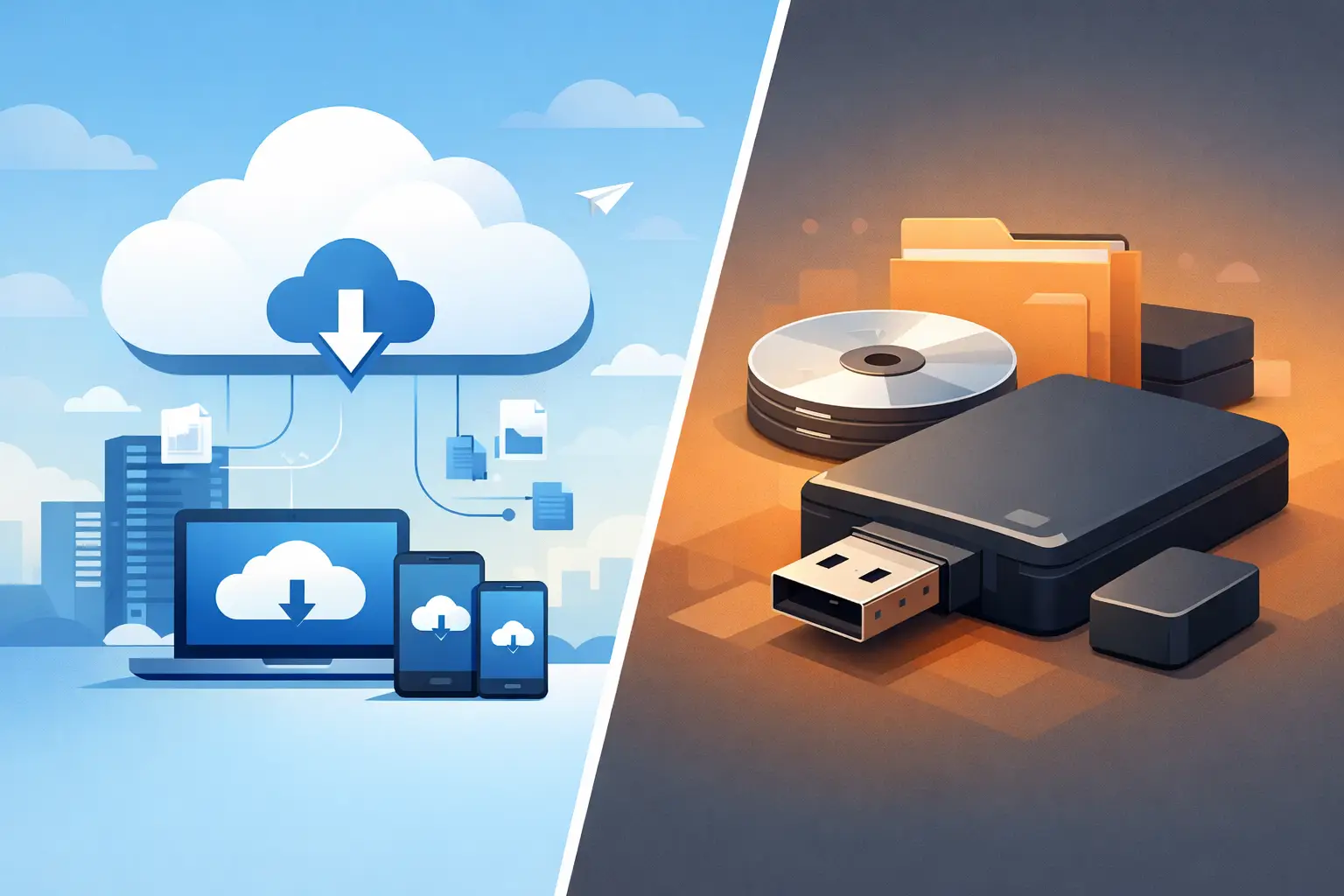
When your old tapes, film reels, photos, or DVDs are finally digitized, one last decision matters more than many people expect: cloud delivery vs usb drive. The right choice affects how easily you can watch, share, store, and protect family memories that may never be replaceable.
For some families, the answer is simple. They want a USB drive they can hold in their hand and tuck away with important keepsakes. Others prefer cloud delivery because they want instant access on phones, tablets, and laptops without worrying about plugging anything in. Most of the time, the best option depends on how you plan to use your files after conversion.
Cloud delivery vs USB drive: the real difference
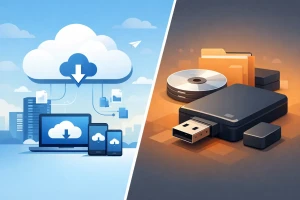
At a basic level, cloud delivery means your digitized files are uploaded to a secure online folder so you can download or view them from an internet-connected device. A USB drive means your files are copied onto a physical storage device that is mailed back or picked up with your original media.
Both options give you access to the same memories, but they work very differently in daily life. Cloud delivery is about convenience and quick sharing. A USB drive is about physical possession and offline access. Neither is automatically better in every situation.
That matters because memory preservation is not just a technical project. It is personal. These files may include a wedding toast, a baby taking first steps, or the last recording of a loved one. Delivery should fit the way your family actually lives, not just what sounds modern or familiar.
When cloud delivery makes the most sense
Cloud delivery is often the easiest option for families who want immediate access. Once your files are ready, you can usually download them on a computer, save them to your phone, or share them with relatives in different states. If your children or grandchildren live far away, cloud access can make those moments feel close again very quickly.
It also helps if you are not comfortable handling physical storage devices. Many newer laptops do not have the same ports people used a few years ago, and some households simply do not use USB drives often anymore. With cloud delivery, there is nothing to plug in, label, or keep track of.
Another advantage is speed. If you are eager to see the results of a VHS transfer or a scanned photo collection, cloud delivery can remove the wait tied to shipping a physical drive. That can be especially appealing when files are needed for a family event, memorial, slideshow, or archive project.
Still, cloud delivery has limits. You need internet access, and large video files can take time to download. Some people also feel less comfortable when their memories live somewhere they cannot physically see. That feeling is understandable. Convenience matters, but so does peace of mind.
Cloud delivery is especially useful for sharing
If your goal is to send copies of family videos to several relatives, cloud delivery is usually the easier path. One person can download the files, another can save them to a computer, and someone else can upload clips into a family slideshow. It removes the step of copying a single USB drive again and again.
For big families, that convenience can be the difference between files sitting untouched and memories being enjoyed right away.
When a USB drive is the better fit
A USB drive gives many customers something they value deeply: a physical copy they can hold onto. For people preserving decades of family history, that can feel more secure and more real. You know where it is, you can store it with other important items, and you do not need an internet connection to access the files.
USB drives are also helpful for households that prefer simple, familiar routines. You can plug the drive into a compatible computer or TV, open the folders, and watch the files directly. For customers who do not want to manage downloads, passwords, or online storage, that simplicity can be a relief.
There is also an emotional side to this choice. When someone has trusted a company with fragile tapes, old film, or one-of-a-kind photos, receiving a physical drive along with the originals can feel complete. It is one more tangible piece of the preservation process.
But USB drives have trade-offs too. They can be misplaced, damaged, or left in a drawer and forgotten. Technology changes over time, and a drive that works easily today may not feel as convenient years from now. A USB drive should be treated as a copy of your memories, not the only place they live.
A USB drive works well for offline storage
If you want access to your files without relying on Wi-Fi, a USB drive is often the practical choice. This can matter for older adults who prefer desktop viewing, for homes with inconsistent internet service, or for anyone who wants a local backup they control directly.
That does not make it foolproof. Physical media can fail too. The key is understanding that physical access and long-term protection are not exactly the same thing.
Cloud delivery vs USB drive for long-term preservation
This is where many people get stuck. They are not just asking which option is easier today. They are asking which option better protects irreplaceable memories for the future.
The honest answer is that neither cloud delivery nor a USB drive should be your only copy. Cloud access can be convenient, but online files should still be downloaded and backed up somewhere you control. A USB drive is useful, but any physical device can eventually fail, become outdated, or get lost.
For long-term preservation, the strongest approach is usually redundancy. Keep more than one copy, and keep them in more than one place. That might mean downloading cloud-delivered files to a home computer and backing them up again, or storing a USB drive safely while also keeping an additional digital copy elsewhere.
Families often assume digitizing media is the final step. It is really the turning point. Once your tapes and photos are converted, preserving the digital files well becomes the next responsibility.
Which option is easier for less tech-savvy households?
If you are choosing for a parent or grandparent, ease of use matters just as much as storage. In many cases, a USB drive feels more straightforward because it is visible and familiar. There is comfort in being able to say, “Your videos are right here.”
On the other hand, some less tech-savvy households actually do better with cloud delivery when a child or grandchild helps manage it. A family member can download the files, organize them, and save them across devices without asking the older relative to learn anything new.
So the better option depends on who will actually be opening, storing, and sharing the files. If the person receiving them wants independence and offline access, a USB drive may be best. If a family helper will handle the files, cloud delivery can be easier than it sounds.
The best answer is often both
For many customers, this is not really an either-or decision. Cloud delivery gives fast access and easy sharing. A USB drive gives you a physical copy that feels secure and simple to store. Together, they cover each other’s weak spots.
That combination is especially helpful when the originals are precious and impossible to recreate. If you are preserving old camcorder tapes, inherited slides, or audio recordings from relatives who are no longer here, having more than one way to access your files is worth considering.
A trusted transfer company should explain these options clearly, without pushing you toward what is easiest for them. The goal is not just to convert media. It is to help you keep those memories accessible and protected in real life.
At HB Media Solutions, that kind of guidance matters because every family archive is different. Some customers want quick digital sharing. Others want something physical to file away with care. Both preferences are valid.
How to choose with confidence
If you are still weighing cloud delivery vs USB drive, start with three questions: Who will use the files most often? How do you want to share them? And where will your backup copy live?
If your top priority is instant access and easy sharing, cloud delivery may be the better fit. If your priority is offline use and a physical copy you can store safely, a USB drive may feel more reassuring. If your memories are truly priceless, choosing both is often the smartest path.
The most helpful decision is the one that makes it easier to revisit those moments a year from now, five years from now, and long after the original tape or photo album has faded. Memories deserve more than conversion alone. They deserve a delivery method that helps them stay close, safe, and ready to be seen again.