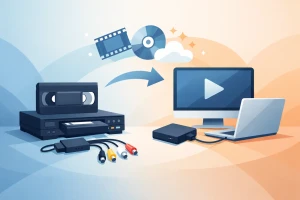

That box of camcorder tapes in the closet usually stays untouched until a birthday, a memorial, or a move brings it back into view. Then the same question comes up fast: can we still watch these? This camcorder tape transfer guide is here to make that decision easier, especially if the recordings hold family moments you cannot replace.
Camcorder tapes were never meant to last forever. Even when they look fine on the outside, the magnetic signal inside can weaken over time. Add heat, humidity, dust, or a broken shell, and a tape that played years ago may now be noisy, unstable, or unreadable. That is why transferring them sooner matters. The goal is not only convenience. It is preservation.
What this camcorder tape transfer guide helps you decide
Most people are not trying to become video technicians. They want to know three things: what kind of tape they have, whether it can still be transferred, and whether they should try it themselves or trust a professional service.
That is the practical crossroads. If your tapes are recent and you still have a working camcorder, a do-it-yourself setup may seem possible. If your tapes are old, mixed formats, or physically damaged, the risk changes. A jammed tape, a dirty playback path, or the wrong equipment can do real harm in one attempt.
A good transfer process starts with identifying the format. Many families have a mix without realizing it. Common camcorder tape formats include VHS-C, MiniDV, Hi8, Video8, Digital8, and full-size VHS. Some require adapters. Some require a specific camcorder or deck. Some look similar but are not interchangeable.
Know your tape format before you do anything
VHS-C is one of the most misunderstood formats because the cassette is small, but it is not the same as MiniDV. VHS-C often works with a mechanical adapter for playback in a VHS VCR, assuming the tape itself is in good shape. MiniDV does not. It needs a compatible digital camcorder or deck.
Hi8, Video8, and Digital8 are another common source of confusion. They use similar-looking cassettes, but playback compatibility depends on the machine. A Digital8 camcorder may play older analog 8mm recordings, but not always. It depends on the specific model.
This is where many transfer projects go wrong. People buy a used player online, assume any matching size tape will work, and then spend hours troubleshooting tracking issues, connection problems, or tapes that will not load. If the recordings matter, guessing is expensive.
Why old camcorder tapes fail
Tape is a physical medium. It stretches, sheds, sticks, and absorbs environmental damage. Florida families know this problem especially well. Heat and humidity are not kind to magnetic media, even when tapes are stored indoors.
Some failures are visible. The shell may be cracked, the pressure pad may be loose, or the tape may be wrinkled. Others show up only during playback, such as dropouts, flickering, muffled sound, or sections that freeze. A tape can also look clean and still have internal binder breakdown that causes sticking during transport.
That matters because playback is not passive. Every transfer requires the tape to move through equipment. If the machine is dirty, misaligned, or simply too rough for an aging cassette, a fragile recording can be damaged while you are trying to save it.
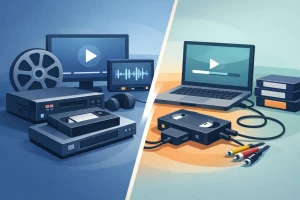
DIY transfer vs professional transfer
There are times when a DIY project makes sense. If you have a working camcorder, a known-good connection method, and tapes that are in decent condition, you may be able to capture the footage at home. For people with only one or two tapes and a comfort level with older hardware, that route can be practical.
The trade-off is consistency and risk. Home setups often run into driver issues, poor capture quality, audio sync problems, and dropped frames. More importantly, they rarely include tape cleaning, repair options, or careful handling for damaged media. If a tape stops midway, gets caught, or shows signs of mold, most households do not have a safe way to proceed.
Professional transfer makes more sense when the footage is important, the formats are mixed, or the tapes are old enough that every playback attempt counts. A trained transfer service can inspect the media first, use the correct playback equipment, and flag issues before damage gets worse. That peace of mind matters when the tape contains a wedding, a child’s first steps, or the last video of a loved one.
What to expect from a quality transfer service
A trustworthy service should make the process feel simple, not mysterious. You should know what formats they handle, how they receive your tapes, what digital file options are available, and whether they return your originals.
You should also expect honest communication about condition. Not every tape can be restored to perfect picture and sound. If the original recording has tracking noise, low light grain, or microphone distortion, those issues may still be present after transfer. Digitizing preserves what is there. It does not create detail that was never captured.
That said, professional equipment often produces a more stable and complete result than consumer-grade playback. Better tape handling, format-specific machines, and careful monitoring can mean fewer interruptions, better signal retention, and less chance of losing footage during capture.
For many families, service matters as much as technology. A founder-led company like HB Media Solutions can make a real difference because people are not handing over generic files. They are trusting someone with birthdays, vacations, school plays, and voices they may not have heard in years.
The best digital format for your transferred videos
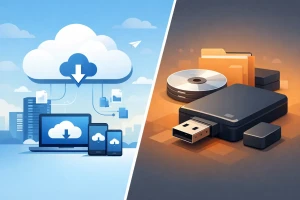
Most households want a simple answer here. In general, digital files are the most flexible option because they can be backed up, copied, shared with family, and viewed on current devices. USB delivery is popular because it is easy to store and use right away.
Some people also want DVDs, especially for older relatives who still use a disc player. That can be helpful, but DVDs should not be your only archive format. Discs can fail, scratch, or become less practical over time. If you choose DVD delivery, it is smart to also keep the digital files.
Cloud backup and an extra copy on a second drive are also worth considering. One digital copy is better than one aging tape, but two or three copies in different places are better than one.
How to prepare your tapes for transfer
You do not need to clean or repair the tapes yourself. In fact, that can make things worse. What helps most is basic organization.
Keep each tape in its case if you still have it. Separate anything labeled damaged, moldy, or broken so you can point it out. If there are dates, events, or names written on the tape, leave them intact. That information helps with sorting and file naming.
It is also useful to tell the transfer service if there are especially important tapes in the batch. If one cassette contains a wedding or a memorial service, say so. Priorities matter when a tape shows signs of age and needs extra attention.
Avoid storing tapes in a hot car, garage, or attic before drop-off or shipping. A stable indoor environment is always safer.
Common questions families ask
One of the biggest concerns is whether old tapes still have anything on them. Often, yes. Even tapes from the 1980s, 1990s, and early 2000s can still be transferred successfully if they have been stored reasonably well. But waiting does not improve the odds.
Another question is whether transferring the tape damages it. A proper transfer should not harm a stable tape, but every playback adds wear. That is one reason to avoid repeated testing at home if the footage is important.
People also ask whether better transfer equipment can make blurry footage sharp. Not exactly. Professional playback can improve stability and capture quality, but it cannot turn a low-resolution home recording into modern high-definition video. The value is in preserving the memory faithfully and making it watchable again.
When it is worth acting now
If you have already noticed picture noise, muffled sound, or a tape that will not rewind smoothly, the clock is moving faster. The same is true if your family no longer has the original camcorder. Equipment disappears long before the memories do.
And sometimes the right time is simply emotional. A parent passes away. A child graduates. Someone asks for family footage for a celebration. Suddenly the tapes are not clutter anymore. They are history.
That is why a camcorder tape transfer guide is really about more than format matching and file delivery. It is about protecting moments that still matter, before age and obsolescence make the decision for you.
If those tapes have been waiting for years, that does not mean it is too late. It just means this is a good time to stop putting them back on the shelf and start giving them a future.