
That box of film reels in the closet is not getting safer with age. If you have old 8mm, Super 8, or 16mm home movies, finding the best methods digitize film reels is less about convenience and more about protecting moments you may never be able to recreate – a grandparent waving at the camera, a child’s first steps, a holiday gathering from decades ago.
Film is durable in some ways, but it is still vulnerable to heat, humidity, dust, scratches, warping, and color fade. Projectors can also damage brittle reels if the film has shrunk or become fragile over time. That is why digitizing film is usually the smartest next step. The question is not whether to do it. It is how to do it well.
Best methods to digitize film reels: what actually works
There is no single method that fits every family, budget, or reel condition. The best choice depends on the film format, how important image quality is to you, and whether the reels are in good shape or already showing signs of age.
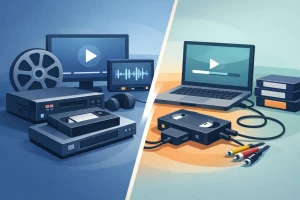
In general, there are three main paths: recording a projected image, using a consumer film scanner, or choosing professional frame-by-frame transfer. All three can create a digital file, but the difference in quality can be significant.
Recording the film off a wall or screen
This is the oldest do-it-yourself approach. You run the reel through a projector and aim a digital camera or smartphone at the projected image.
It is inexpensive, and for some families it feels like a quick solution. But it usually produces the weakest results. Flicker is common because projector frame rates and camera frame rates do not match cleanly. You can also end up with soft focus, washed-out contrast, distorted geometry, and room-light interference. If the film is brittle, the projector itself may create new damage during playback.
For reels that hold meaningful family history, this method is usually a last resort rather than one of the best methods to digitize film reels. It can work for a rough reference copy, but not for preservation.
Using a consumer film scanner at home
Consumer film scanners are a step up from filming a projection. These machines feed the reel through a device that captures the image digitally, often saving to an SD card or computer.
This option can be appealing if you have time, patience, and a moderate number of reels. It gives you more control than projecting onto a wall, and some units reduce flicker by scanning frame by frame rather than recording moving projection. For basic access copies, the results can be acceptable.
The trade-off is consistency. Lower-cost scanners often struggle with exposure, sharpness, color balance, and film transport. Some apply heavy digital sharpening or compression that makes the image look artificial. Others handle film too roughly, which matters if your reels are old, curled, or spliced. What looks affordable upfront can also become time-consuming if each reel needs extra cleanup or rescanning.
Professional frame-by-frame film transfer
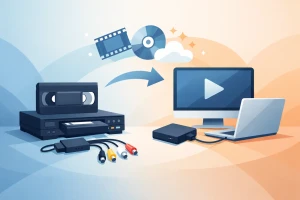
For most families who want the safest process and the best long-term result, professional frame-by-frame transfer is the strongest option. Instead of projecting the film in real time, professional systems capture each frame individually and assemble the motion digitally.
This method usually delivers better detail, more stable color, less flicker, and smoother playback. It is also much better for fragile reels because the handling is more controlled than old projector-based setups. If a reel has damaged splices, dust, fading, or uneven exposure, an experienced transfer service can often improve the final result in ways home equipment cannot.
It costs more than a DIY attempt, but this is where quality and peace of mind tend to align. If the film includes one-of-a-kind family footage, professional transfer is often the method people wish they had chosen first.
How to choose the best method for your reels
Start with the condition of the film. If the reel smells strongly of vinegar, feels brittle, has warped edges, or shows broken perforations, do not run it through old projection equipment. Those are warning signs that the film may be deteriorating. Fragile reels need careful handling before any transfer begins.
Next, think about your goal. If you only want to see what is on a reel and quality does not matter much, a basic scanner may be enough. If you want to share these movies with children and grandchildren, save them for the future, or create a clean archive, professional transfer makes more sense.
The size of the project matters too. A single short reel might tempt you to experiment at home. Ten, twenty, or fifty reels usually change the math. DIY methods can become a long project with uneven results, while a professional service can organize, digitize, and return everything in a format that is easier to enjoy.
Format matters more than many people expect
Not all film reels are the same. 8mm, Super 8, and 16mm each have different image characteristics and handling needs. Some reels also have magnetic sound, while others are silent. If sound is present, the transfer method has to support it properly.
This is one reason families often get frustrated with generic equipment. A scanner that handles one format well may perform poorly with another. Before choosing a method, make sure you know what kind of reels you actually have.
Resolution is important, but not the whole story
People often focus on whether a transfer is delivered in HD, 2K, or 4K. Resolution matters, but it is only one part of quality. A high-resolution file created from a poor capture is still a poor capture.
What often matters more is steady film transport, accurate exposure, good color handling, and careful treatment of the original reel. A properly captured HD transfer can look better than a badly scanned higher-resolution file. The best methods digitize film reels by preserving the image faithfully first, then delivering it in a useful modern format.
Why professional help is often worth it
When film has been sitting in storage for decades, the biggest risk is not just image quality. It is accidental damage during the transfer attempt. Old home movies are often irreplaceable, and once a section tears or burns, there is no redo.
A professional service typically starts by inspecting the reels, checking for damage, and identifying any handling concerns before transfer. That kind of screening can prevent avoidable loss. Experienced technicians also know how to work with faded film, splice problems, and reels that are not labeled clearly.
For families in South Florida, having the option to work with a trusted local provider can make the process feel more comfortable. Being able to ask questions, get a clear quote, and know where your originals are going matters when the box in your hands contains your family history. That personal care is a big part of why many people choose an experienced company like HB Media Solutions instead of mailing reels to an unknown operation.
What you should ask before choosing a service
A good transfer service should explain its process in plain English. You should be able to ask how the film is handled, whether the transfer is frame by frame, what formats are accepted, and what digital files you will receive.
It also helps to ask whether light cleaning, minor splice repair, or basic image correction is included. Not every reel needs restoration, but many benefit from at least some preparation. Clear communication is a good sign. If a company cannot explain how it protects your originals, that is worth taking seriously.
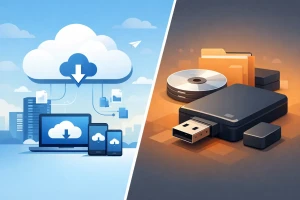
Delivery format matters too. Most families want digital files they can save, copy, and watch easily on modern devices. Some also want a USB drive or additional backup options. The right setup depends on how you plan to store and share the memories after transfer.
After digitizing, do not stop at one copy
Once your reels have been digitized, make more than one backup. Keep one copy on a reliable external drive and another in a separate location or cloud-based storage. Digital files are far easier to preserve than film, but they still need a backup plan.
It is also a good time to label everything while the memories are fresh. Add names, years, locations, and short descriptions to folders or file names. That small step makes a huge difference for the next generation, especially when no one else remembers who is in the footage.
Old film reels rarely ask for attention until time has already started to work against them. If you have been meaning to deal with them someday, someday is probably now. The best transfer method is the one that protects the reel, respects the memory, and gives your family an easy way to watch those moments again.