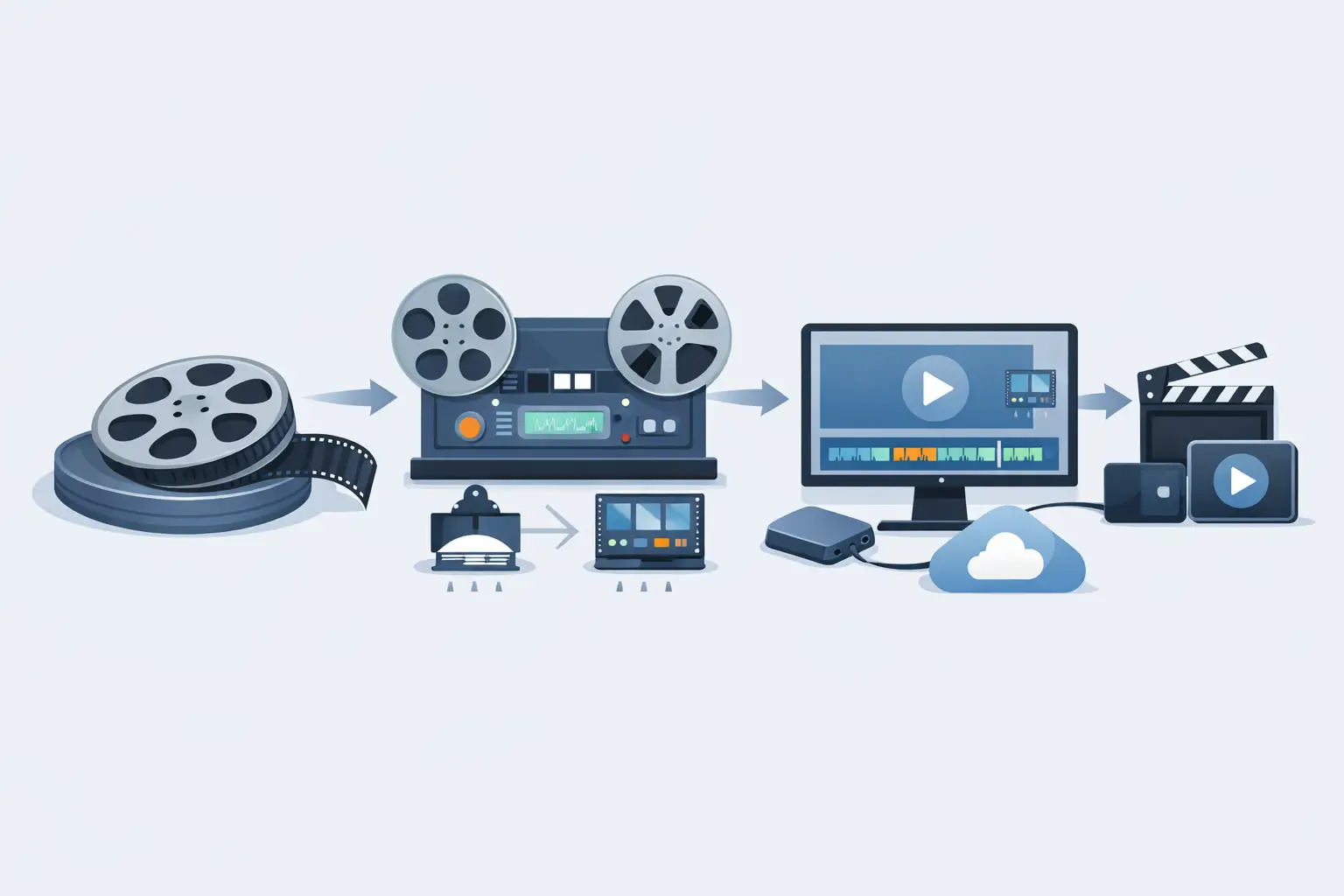
That small box of film reels in the closet usually holds more than old footage. It holds first birthdays, holiday dinners, parents who looked impossibly young, and voices you may never hear the same way again. The film reel transfer process is how those moments move from fragile, aging reels into digital files you can actually watch, save, and share.
For many families, film feels more intimidating than VHS or photos. You can see the reels, but you often cannot play them. Projectors are harder to find, bulbs burn hot, and older film can become brittle, faded, or warped over time. That is why professional transfer matters. It is not just about converting one format into another. It is about handling delicate originals carefully while getting the best possible image from material that may already be showing its age.
What happens during the film reel transfer process
At its core, the film reel transfer process has a simple goal: capture the content on film and turn it into a stable digital format without causing damage. The actual work, though, involves more care than most people expect.
It usually starts with identifying the film type and size. Home movies are often found on 8mm, Super 8, or 16mm reels, and each format behaves a little differently. Some reels are in good shape and transfer smoothly. Others arrive with dust, broken splices, shrinkage, or sections that have become fragile after decades in storage.
Before any transfer begins, the reel should be inspected. This step helps catch problems early. If film is wound too tightly, has torn sprocket holes, or shows signs of warping, those issues need to be addressed before running it through equipment. Skipping inspection can risk permanent damage, especially with older home movies that have sentimental value and no backup.
Once the reel is evaluated, the film is cleaned as needed. Dust, debris, and surface residue can all affect image quality. Cleaning will not make old footage look brand new, but it can improve clarity and reduce distractions on the final digital file. It also helps the film move more safely through the transfer equipment.
Then comes the capture stage. This is where each frame of the film is scanned or recorded into a digital format. The quality of this step matters a great deal. A professional setup is designed to reproduce motion more naturally, preserve detail, and minimize flicker or exposure issues. A poor transfer can make film look jumpy, washed out, or darker than it should be.
After capture, the digital file is reviewed. Sometimes basic corrections are made to improve brightness, color balance, or overall watchability. This is where experience helps. Every reel is different. Some films were well exposed and stored in ideal conditions. Others have color fading, underexposed scenes, or physical wear that can only be improved so much. Good providers are honest about that. The goal is to get the most from the source, not promise something the original film cannot deliver.
Why quality varies from one reel to another
One of the most common questions families ask is why one reel looks sharp while another from the same box looks faded or soft. The answer is usually a mix of age, storage conditions, and how the film was shot in the first place.
Film does not deteriorate at the same pace in every home. Reels stored in cool, dry spaces often hold up better than those kept in attics, garages, or humid closets. Heat and moisture can accelerate damage, causing brittleness, mold, or color shifts. Even if the reel looks fine from the outside, internal issues can still affect playback and transfer quality.
The original camera also matters. Home movie cameras varied widely, and so did the person using them. Some reels were shot steadily in bright sunlight. Others were filmed indoors with low light, quick movement, or uneven exposure. A transfer can preserve and improve what is there, but it cannot create detail that was never captured.
This is why the film reel transfer process should be approached with realistic expectations and professional care. The best transfers respect the character of the original footage while making it easier to enjoy in the present.
Film reel transfer process options: DIY vs. professional service
It is natural to wonder whether you can handle film conversion yourself. In some cases, people try using old projectors, consumer digitizing kits, or even filming projected footage with a phone or camera. While that may seem like a quick solution, it often creates more problems than it solves.
Projectors can run hot, and older film does not always tolerate that well. Consumer setups may introduce flicker, uneven framing, focus issues, or low-resolution results. If a reel is damaged, brittle, or loosely wound, a do-it-yourself attempt can also increase the chance of breakage.
A professional service offers a safer path for irreplaceable footage. The equipment is built for controlled transfer, and the handling process is designed around preservation. That matters when you are dealing with film that may be the only record of a family member, a childhood home, or events that can never be recreated.
For many households, peace of mind is the deciding factor. The value is not only in the final digital file. It is in knowing the original materials were treated carefully from start to finish.
What you receive after transfer
Most families want the result to be simple. They do not want to learn a complicated archive system just to watch old memories. After the film reel transfer process is complete, the content is usually delivered as digital video files on a format that fits everyday use, such as a USB drive, external storage, or another digital delivery option.
That means your home movies can be watched on a computer, smart TV, or shared with children and grandchildren more easily. It also gives you the opportunity to make copies, organize files by year or family member, and keep backups in more than one place.
Your original reels should also be returned. Even after digitizing, they still matter. They are part of your family history, and keeping them in proper storage gives you another layer of protection.
How to prepare your reels before sending them in
If you have a box of mixed media, it helps to separate film reels from tapes, photos, and slides before drop-off or shipping. You do not need to clean the reels yourself, and it is often better not to. Home cleaning attempts can scratch film or make damage worse.
If you know any details, such as approximate dates, family names, or event labels, include them. Even a note that says “Christmas around 1972” or “beach trip with grandparents” can help with organization later. If a reel looks broken, smells unusual, or has obvious mold or damage, mention that upfront so it can be handled appropriately.
Families in South Florida often appreciate having the option of local drop-off for fragile originals, while others prefer a mail-in process with careful packing and clear communication. What matters most is choosing a service that explains the steps clearly and treats your materials like the one-of-a-kind items they are.
When to transfer film reels
Sooner is better. Film does not wait for a convenient time. Even reels that seem fine today can decline with another few summers of heat, another move, or another year in storage. If your family has been saying for years that you should “do something with those old movies,” this is usually the right moment.
The best time to digitize is before the reels become unplayable. Once film suffers severe shrinkage, heavy mold, or major physical damage, transfer becomes more difficult and in some cases less complete. Acting early gives you more options and usually better results.
At HB Media Solutions, that process is handled with the kind of care families want for irreplaceable memories – careful review, professional transfer, and a straightforward experience that takes the worry out of preserving old film.
Some reels will surprise you. A few seconds of grainy footage can bring back a person, a place, or a feeling you thought was gone. Getting them transferred is not really about technology. It is about keeping those moments close enough to revisit, while you still can.