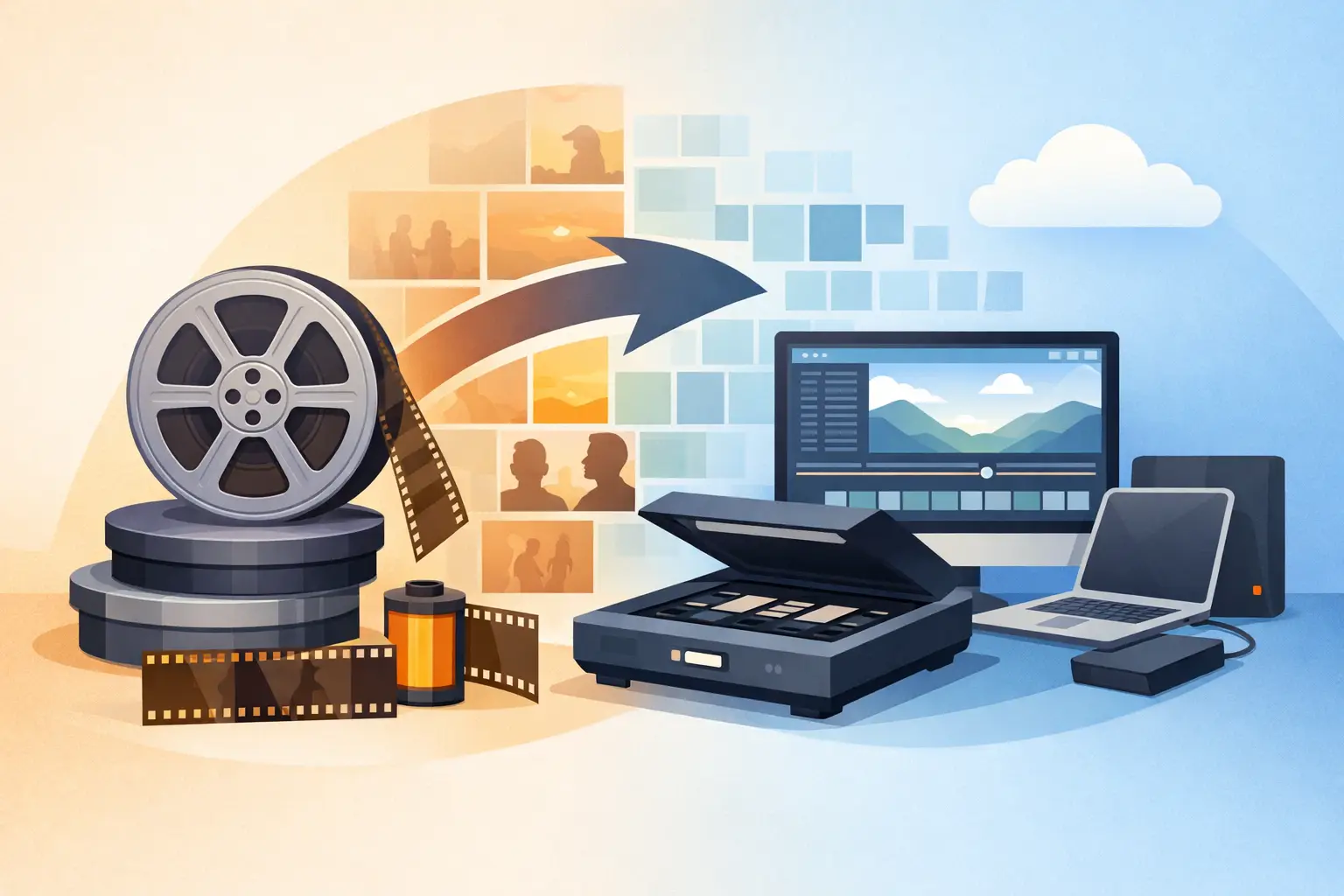
A film reel can look fine on the outside and still be quietly fading inside the can. That is why so many families ask when should film be digitized – and the honest answer is usually sooner than people think.
Old film does not wait for a convenient time. It slowly reacts to heat, humidity, poor storage, and simple age. By the time a reel starts showing obvious damage, some of the image quality may already be gone for good. If the film holds home movies, family milestones, or one-of-a-kind historical footage, waiting too long can turn a preservation project into a recovery project.
When should film be digitized? The short answer
If your film is older, has not been inspected in years, or contains memories you cannot replace, it should be digitized now rather than later. Most people assume film lasts forever if it has been tucked away in a closet, but storage conditions matter more than good intentions.
There is also a practical reason to act early. Digitizing film is not only about saving it from damage. It is about making it viewable again. Once reels are transferred to digital files, they become easier to watch, share with family, back up, and preserve for the next generation.
Film ages even when it is sitting still
A lot of families believe their reels are safe because they have barely been handled. Unfortunately, film can deteriorate while doing absolutely nothing. Color can shift. Contrast can weaken. The material itself can become brittle, warped, or shrink over time.
This is especially true in warm, humid climates. In places like South Florida, garages, attics, and storage units can accelerate the aging process. A reel that survived decades in a cool closet may decline much faster after even a few seasons in poor conditions.
That does not mean every old reel is on the brink of failure. Some film holds up surprisingly well. But there is no benefit to waiting for visible damage before taking action.
The best time to digitize film is before there is a problem
The ideal time to transfer film is when it is still stable enough to be handled safely and scanned cleanly. Once film becomes badly brittle, moldy, torn, or shrunken, the job may require extra repair work and some footage may be harder to recover at full quality.
Think of digitization as preventive care. Families often wait until after a parent passes away, during a move, or when organizing an estate. Those are common moments to finally go through boxes of old media, but they are not always the best moments for the film itself. By then, the reels may have been sitting for 40, 50, or even 60 years.
If you already know the footage matters, that is enough reason to begin. You do not need to wait for a special occasion.
Signs your film should be digitized right away
Some reels should move to the top of your list. If you notice a vinegar-like smell, that can signal chemical deterioration. If the film looks curled, feels brittle, has visible mold, or shows broken splices, it should be handled professionally as soon as possible.
There are also less dramatic warning signs. Faded labels, dusty cans, uncertain storage history, and reels that have been sitting in a hot room for years all increase the risk. Even if the film still appears watchable, those conditions can lead to steady image loss.
Another urgent sign is simple rarity. If the reel contains a wedding, baby footage, military service, vacations with relatives who are no longer here, or early footage of children and grandparents, it belongs in the irreplaceable category. That alone makes the timing easy.
Waiting has real trade-offs
People delay digitizing film for understandable reasons. They want to organize everything first. They are not sure what is on each reel. They assume the process is expensive. Sometimes they just feel nervous about handing over fragile originals.
Those concerns are real, but waiting creates its own cost. The longer film sits, the greater the chance that colors fade further, sprockets weaken, or the reel needs restoration before transfer. In some cases, a reel that could have been digitized cleanly a few years earlier becomes much more delicate and time-consuming.
There is also an emotional trade-off. A box of reels often gets passed from one family member to another with the same promise: someday we will deal with this. Then someday turns into another decade. Meanwhile, nobody gets to see the footage.
What if the film still looks okay?
That is actually the best-case scenario. If your film appears clean and stable, digitizing now gives you a better chance at a strong transfer. Good preservation work is always easier before damage progresses.
It also gives you options. You can create digital copies for children and grandchildren, keep backups in more than one place, and enjoy the footage without running the original film through old projectors. Repeated projection can add wear, especially if equipment has not been maintained.
So if the reels look okay, do not take that as a reason to postpone. Take it as your window of opportunity.
What if some reels are damaged already?
You should still have them evaluated. Families sometimes assume a damaged reel is a lost cause, but that is not always true. Professional transfer services can often clean, repair, and stabilize film enough to recover important footage.
The key is not to test fragile reels yourself if you are unsure of their condition. Old projectors can jam film, and home handling can make small tears worse. If the reel is sticking, brittle, or giving off a strong odor, it needs careful handling from the start.
How age affects the answer
If your film is from the 1950s through the 1980s, the answer to when should film be digitized is usually now. At that age, even well-stored reels are far enough along that delay adds risk without adding any upside.
For film from the 1990s or later, the urgency can vary depending on storage conditions and the type of film. But even newer reels are not immune to heat, moisture, and neglect. And because film viewers and repair knowledge are less common than they once were, access gets harder as the years pass.
In other words, age matters, but access matters too. A reel you cannot safely watch is already halfway to being lost.
Why professional digitization matters
Film is delicate, and every reel tells its own story. Some need only careful transfer. Others need cleaning, repair, or color correction to bring the images back as clearly as possible. A professional service can inspect the film, identify problems before they worsen, and transfer it using equipment designed for aging media rather than improvised consumer setups.
That peace of mind matters to families. When memories only exist on one fragile reel, the process should feel safe, clear, and handled with care. That is part of what makes working with an experienced preservation company so valuable.
For families in South Florida, local help can also make the process feel more personal. Being able to ask questions, understand your options, and know where your media is being handled can remove a lot of hesitation. HB Media Solutions has built its reputation around exactly that kind of careful, hands-on service.
A simple way to decide
If you are still unsure, ask yourself three questions. Can this footage be replaced? Do I know it has been stored well? Am I comfortable risking more loss by waiting another few years?
If the footage is one of a kind, if storage has been less than ideal, or if you simply do not want to gamble with family history, the timing is already clear. Digitizing film is not about reacting to disaster at the last possible moment. It is about protecting something meaningful while there is still more to save.
The right time is usually earlier than expected, and that is good news. Acting now gives your memories their best chance to stay vivid, viewable, and shareable for the people who will treasure them next.