A box of VHS tapes in the closet can feel harmless until one of them won’t play, a camcorder tape jams, or a photo album starts fading at the edges. That is where the choice between a professional transfer service vs DIY digitizing becomes real. For many families, it is not just about getting files onto a computer. It is about protecting birthdays, weddings, baby videos, and voices you may never be able to recreate.
Professional transfer service vs DIY digitizing: what are you really choosing?
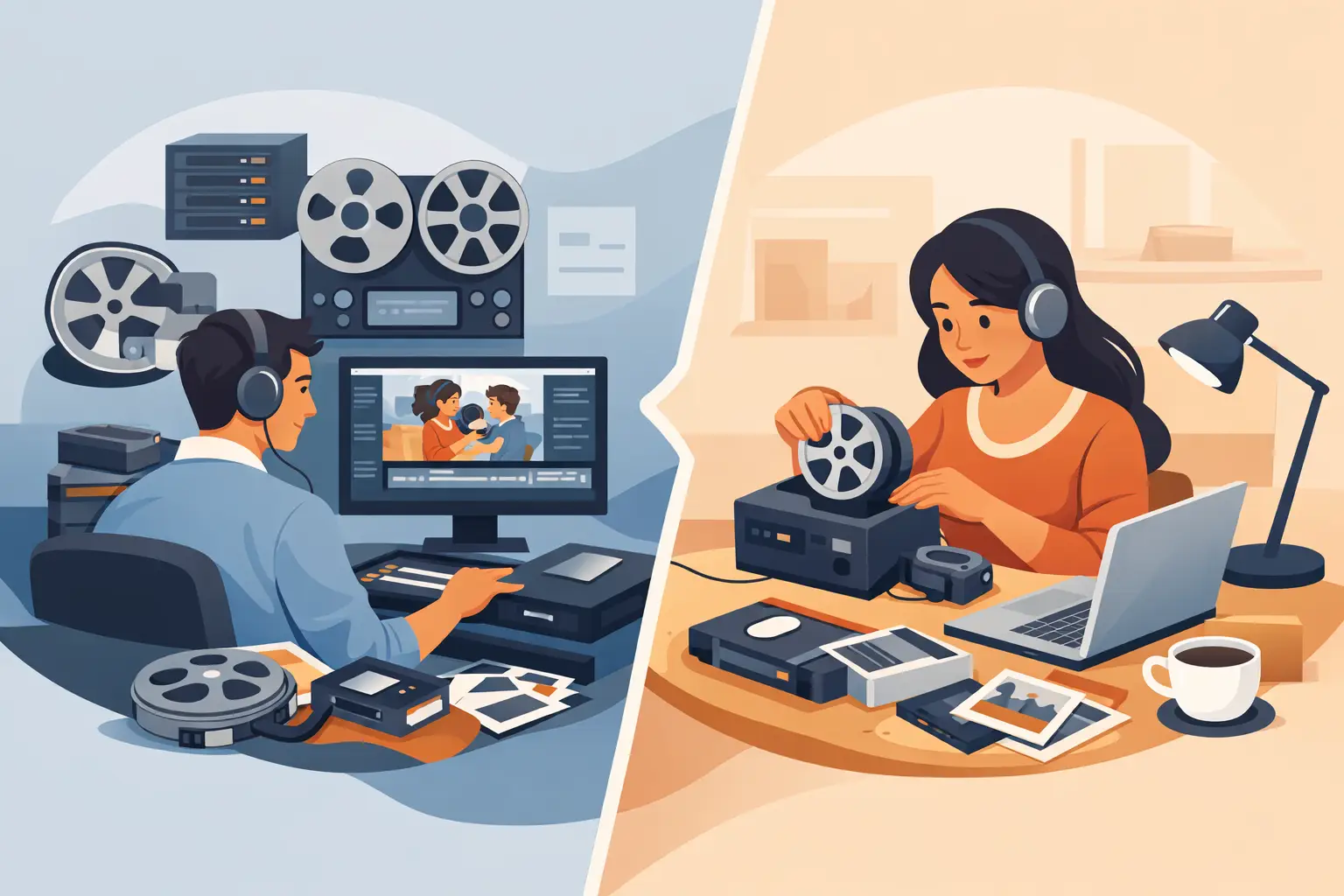
At first glance, this decision can look simple. Do it yourself and save money, or hire a company and pay for convenience. In practice, the choice is more about risk, quality, and how much these originals matter to you.
DIY digitizing appeals to people who are comfortable with equipment, have time to learn, and are working with media in decent condition. If you already own a functioning VCR, camcorder, turntable, scanner, or tape deck, the project may seem manageable. For a small batch of items, especially if they are not especially fragile, a home setup can work.
A professional transfer service is often the better fit when the collection is large, the media is aging, or the recordings are irreplaceable. Older tapes can stick, stretch, shed, or snap. Film reels can become brittle. Slides and negatives may need careful handling and color correction. In those cases, the service is not just about conversion. It is about preservation.
The real cost of DIY digitizing
Many people start with DIY because it sounds cheaper. Sometimes it is. But the full cost is rarely just one cable and an afternoon.
You may need playback equipment that still works properly, along with capture hardware, software, adapters, external storage, and a computer that can handle large files. If your media spans multiple formats, the cost climbs quickly. A VHS transfer setup will not help with MiniDV, Hi8, 8mm film reels, slides, negatives, or audio cassettes.
Then there is the time cost. A two-hour tape usually takes about two hours to digitize in real time, and that is assuming the equipment behaves. Add setup, file naming, troubleshooting, editing, and organizing backups, and one box of media can turn into a full weekend project or several.
The hidden cost is mistakes. If a tape is eaten by a machine, or a scanner introduces poor color and low detail, you may not realize the problem until later. Saving money up front does not feel like a win if the result is incomplete or the original is damaged.
Where professional service earns its value
When people choose a professional transfer service, they are usually paying for three things at once: better handling, more consistent quality, and less stress.
Professionals work with dedicated equipment designed for media transfer and restoration. That matters because consumer-grade gear often introduces noise, tracking issues, weak color, unstable playback, or poor resolution. With aging media, stable playback and proper calibration can make the difference between a usable transfer and a disappointing one.
Experience matters just as much as equipment. Someone who digitizes old media every day can spot warning signs fast. They know when a tape needs careful handling, when a reel needs repair, and when a file format or delivery option will actually be useful for your family. That kind of judgment is hard to replace with a tutorial.
There is also peace of mind. For families with boxes of memories accumulated over decades, handing the project to a trusted team can remove a lot of anxiety. A company like HB Media Solutions has built its reputation around careful handling and personalized service, which matters when the originals are one of a kind.
Quality differences are not always obvious until later
This is where professional transfer service vs DIY digitizing often becomes clear. A DIY transfer may look acceptable on a quick first watch, but problems can show up once you play it on a larger screen or try to archive it long term.
Common DIY issues include washed-out colors, low audio levels, dropped frames, video noise, poor cropping, and files saved in low-quality formats. Photo scans can come out flat, soft, or improperly aligned. Film transfers can flicker. Audio transfers may include hum or uneven volume.
A professional service usually focuses on creating stable, clean, well-preserved digital files that are easier to view, share, and store. Not every recording can be made perfect, especially if the original has already degraded, but a good transfer can often recover far more than a basic home setup.
That matters years from now. Once the tape player is gone and the original continues aging, the digital file may become your main access point to that memory. It is worth asking whether you want a quick copy or the best preservation copy you can reasonably get.
When DIY digitizing makes sense
DIY is not the wrong choice for everyone. In some situations, it is practical and perfectly reasonable.
If you have only a few items, the originals are in good shape, and you already own working equipment, DIY can be a good option. It can also make sense for low-stakes material, test projects, or recordings where perfection is not the goal. Some people genuinely enjoy the process and want full control over settings, file formats, and editing.
DIY can also work for more tech-comfortable households that are willing to learn and accept a few compromises. If the main goal is access rather than archival quality, that may be enough.
The key is being honest about the condition of the media and your tolerance for risk. If you are nervous about handling the originals, that feeling is usually telling you something important.
When a professional transfer service is the safer choice
A professional service is usually the better route when your media is fragile, rare, or emotionally significant. That includes old camcorder tapes, deteriorating VHS collections, film reels, damaged DVDs, slides, negatives, and audio recordings that may already be showing signs of age.
It is also the smarter choice when the collection is large. Families often underestimate how long digitization takes until they start. Twenty tapes can mean dozens of hours of active and passive work. If the project has been sitting on your to-do list for years, that is often a sign that outsourcing it will actually get it done.
This option becomes even more valuable when you want consistent organization and delivery. Receiving your originals back along with clearly labeled digital files can save a great deal of frustration later, especially if several family members will be sharing the collection.
For local families in South Florida, working with an established storefront can add another layer of reassurance. Being able to ask questions, drop off media in person, and know who is handling it can make the process feel much more personal.
The emotional side of the decision
People rarely talk about this part, but it matters. Digitizing old media is not like replacing a gadget or shopping for office supplies. These are often the only recordings of someone’s laugh, voice, or face at a certain age. A tape from a wedding or a reel from a grandparent’s early years carries emotional weight.
That is why the cheapest option is not always the best option. If losing or damaging the original would be heartbreaking, the decision should reflect that. The question is not just, Can I digitize this myself? It is, Am I comfortable being the one responsible if something goes wrong?
For some people, doing it themselves feels meaningful. For others, the best gift they can give their family is to place those memories in experienced hands and finally preserve them properly.
How to decide without overthinking it
If you are still unsure, start with three simple questions. How many items do you have? What condition are they in? How upset would you be if one were damaged or transferred poorly?
If the collection is small and replaceable, DIY may be enough. If the collection is large, aging, or deeply personal, a professional transfer service is usually the wiser path.
There is no one-size-fits-all answer. Some families even choose a middle ground by testing a few noncritical items at home and sending the most valuable materials to a professional. That approach can make sense if you want to balance budget with peace of mind.
What matters most is not choosing the most technical route. It is choosing the one that gives your memories the best chance of lasting. Years from now, the goal is simple: to be able to press play, hear the voices, see the faces, and feel grateful you took action while you still could.