
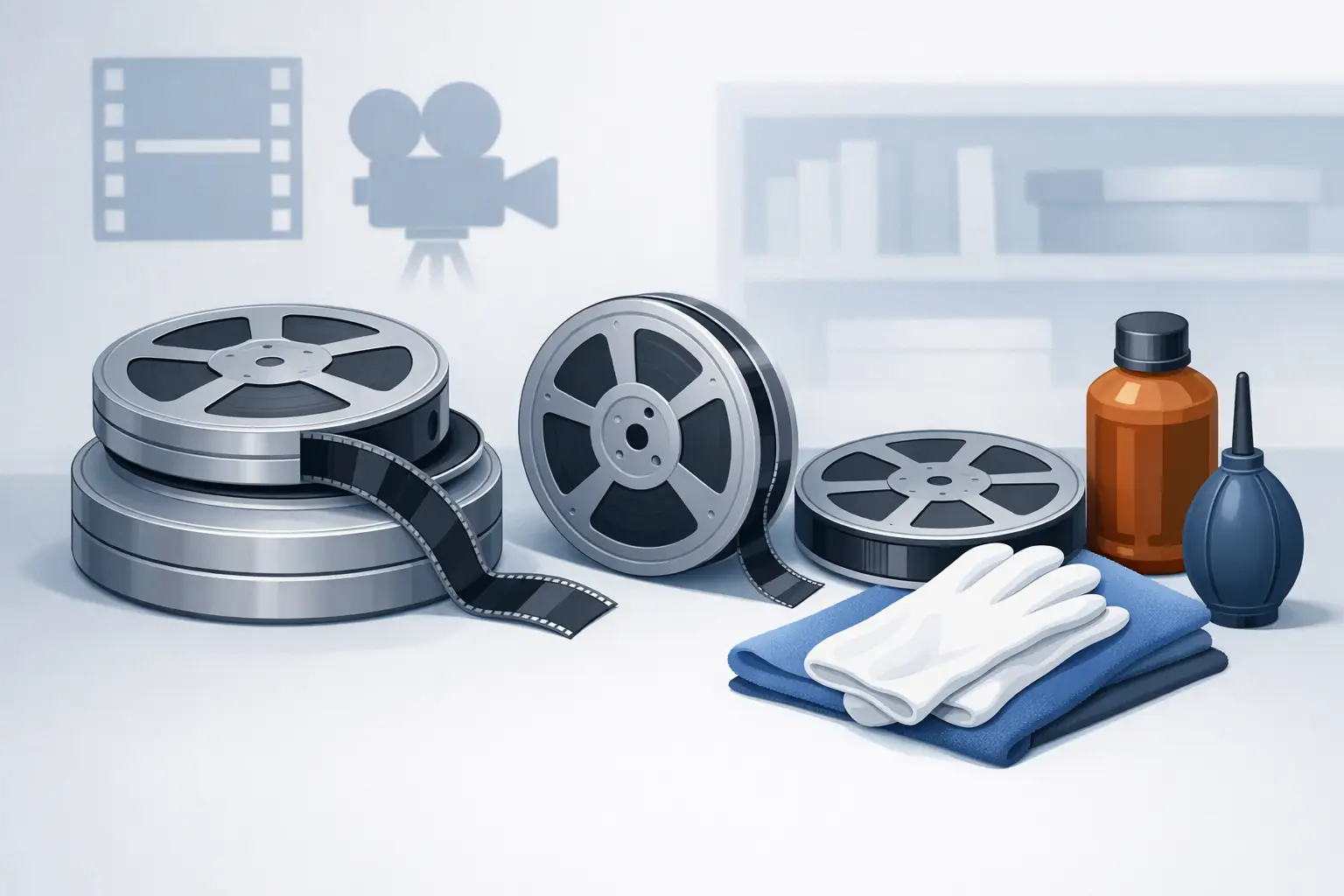
A film reel can sit quietly on a shelf for decades and still hold some of the most important moments in a family’s history. Birthdays, weddings, first steps, holiday gatherings – many of these memories were captured on 8mm or 16mm film long before smartphones and cloud backups existed. If you are wondering how to preserve film reels, the answer starts with one simple truth: film does not wait forever.
Unlike digital files, reels can fade, shrink, warp, or become brittle with age. Heat, humidity, dust, and poor handling all speed up the damage. The good news is that preservation is possible, and you do not need to be a film expert to make smart decisions now.
How to preserve film reels before damage gets worse
The first priority is storage. Film lasts longest in a cool, dry, stable environment. That means avoiding attics, garages, sheds, and any room that gets hot or damp. In Florida especially, humidity is not a small issue. Moisture can encourage mold, and once mold reaches film, cleanup becomes much more difficult and risky.
A closet inside the main living area is usually better than a garage cabinet or outdoor storage room. Aim for steady temperatures rather than dramatic swings. Even if a reel looks fine today, years of repeated heat exposure can weaken the film base and affect image quality.
The container matters too. If your reels are stored in old metal cans that show rust or have a strong vinegar-like smell, that can be a warning sign. Film should be kept in clean, ventilated archival containers when possible. Sealing damaged film tightly in the wrong container can trap moisture and make deterioration worse.
Handle old film reels with care
One of the fastest ways to damage film is through well-meaning handling. It is tempting to pull out a reel, hold it up to the light, or thread it through an old projector just to see what is on it. But older film can be fragile, and a projector that has not been serviced in years can scratch, tear, or burn the film.
If you need to inspect a reel, touch only the edges when possible and make sure your hands are clean and dry. Some people prefer lint-free gloves, while others use clean bare hands for better control. The main goal is to avoid fingerprints, dirt, and unnecessary bending.
If the reel feels stiff, smells sour, or looks wavy or warped, do not force it. That is usually the point where home handling should stop. Preservation is not just about storage. It is also about knowing when not to experiment.
Watch for common signs of film deterioration
Old reels do not always fail in obvious ways. Sometimes the picture still seems present, but the film itself is becoming unstable. A sharp vinegar odor is one of the most common warning signs. This can indicate chemical breakdown in certain film stocks, often called vinegar syndrome. Once that process begins, it can spread and accelerate over time.
Other red flags include brittleness, curling, white powder, mold spots, broken sprocket holes, and reels that no longer wind smoothly. Color fading is also common, especially with older home movies. Reds may dominate while blues and greens disappear, leaving images with a heavy pink or orange cast.
Some damage can be slowed. Some can be repaired. But no preservation method can fully reverse everything once the film has severely deteriorated. That is why timing matters.
Digitizing is a key part of how to preserve film reels
Physical storage protects the original reel, but digitizing gives you access and backup. For most families, that is the turning point. Once a reel is transferred to digital, you can watch it without running fragile film through a projector. You can also share copies with children, grandchildren, and relatives without risking the original.
This is one reason digitizing is such an important part of how to preserve film reels. It does not replace proper storage, but it adds a layer of security that physical media alone cannot provide. If a reel eventually becomes too delicate to project, the memory is still there in a usable format.
There is a trade-off, though. Not all transfers are equal. A poor-quality transfer can make old footage look darker, shakier, or less detailed than it really is. Low-end transfer methods may also fail to capture the full frame or may introduce flicker. When memories are irreplaceable, quality matters as much as convenience.
Should you preserve film reels at home or use a professional service?
It depends on the condition of the reels and your comfort level. If your film is clean, stable, and stored reasonably well, there are a few basic things you can do at home: improve storage conditions, label reels clearly, keep them organized, and avoid unnecessary projection.
But when reels are old, unknown, moldy, broken, or emotionally significant, professional help is often the safer choice. A trained transfer and preservation team can inspect the reels, identify damage, and use equipment designed for fragile media. That lowers the chance of loss during playback or transfer.
This matters even more for families who have just one copy of a wedding film, a military home movie, or footage of relatives who are no longer here. In those cases, peace of mind is worth a great deal. A careful, experienced process can make the difference between preserving history and accidentally damaging it.
For many households, the challenge is not just technical. It is emotional. People know the reels are aging, but they are afraid to hand them over, afraid the content may be lost, or simply unsure where to start. A dependable preservation service helps remove that stress by making the process clear and careful from the beginning.
Organizing reels now can save time later
Before digitizing, it helps to gather everything in one place and do a simple sort. Separate labeled reels from unlabeled ones. If boxes include dates, family names, or locations, keep that information with the reels. Even small notes written decades ago can help identify what is on the film later.
You do not need to build a full archive. Just create enough order that the collection makes sense. Grouping reels by family branch, time period, or event can make digitized files much easier to name and share.
Try not to tape notes directly onto old film containers if the adhesive is failing. Instead, place a fresh note nearby or label the outside of a new storage box. The goal is to preserve both the footage and the story around it.
The best long-term plan combines preservation and access
The strongest approach is usually a two-part plan. First, protect the original reels with better storage and minimal handling. Second, create digital copies so the footage can be viewed, shared, and backed up.
After digitizing, keep more than one copy of the files. Store one on an external hard drive and another in a second location or cloud account if that works for your family. Digital files are safer when they exist in more than one place. One copy is convenience. Two or three copies are preservation.
Still, do not throw away the reels just because you have digital versions. The originals remain valuable. In some cases, better scanning technology may become available later, and the physical reel may still contain detail worth preserving again.
If you are in South Florida and have a box of reels that has been sitting in a closet for years, having them looked at sooner rather than later is often the smartest move. A careful inspection can tell you whether the film is stable, whether repair is needed, and what kind of transfer will protect the footage best. Companies like HB Media Solutions work with families who want that process handled with both technical care and real respect for what those memories mean.
Old film has a way of sneaking up on people. One year it is a box you mean to get to later, and the next it is a fragile archive showing signs of age. The best time to preserve it is before it forces the issue. If those reels matter to your family, treating them gently now can keep those moments alive for many years to come.