If you’ve just found a box of family tapes in a closet, one of the first questions is usually how long does it take to convert VHS to digital. That question matters for a practical reason – you want your videos back – but it also matters emotionally. These are often birthday parties, weddings, school plays, and voices you may not have heard in years. When memories are sitting on aging tape, time feels personal.
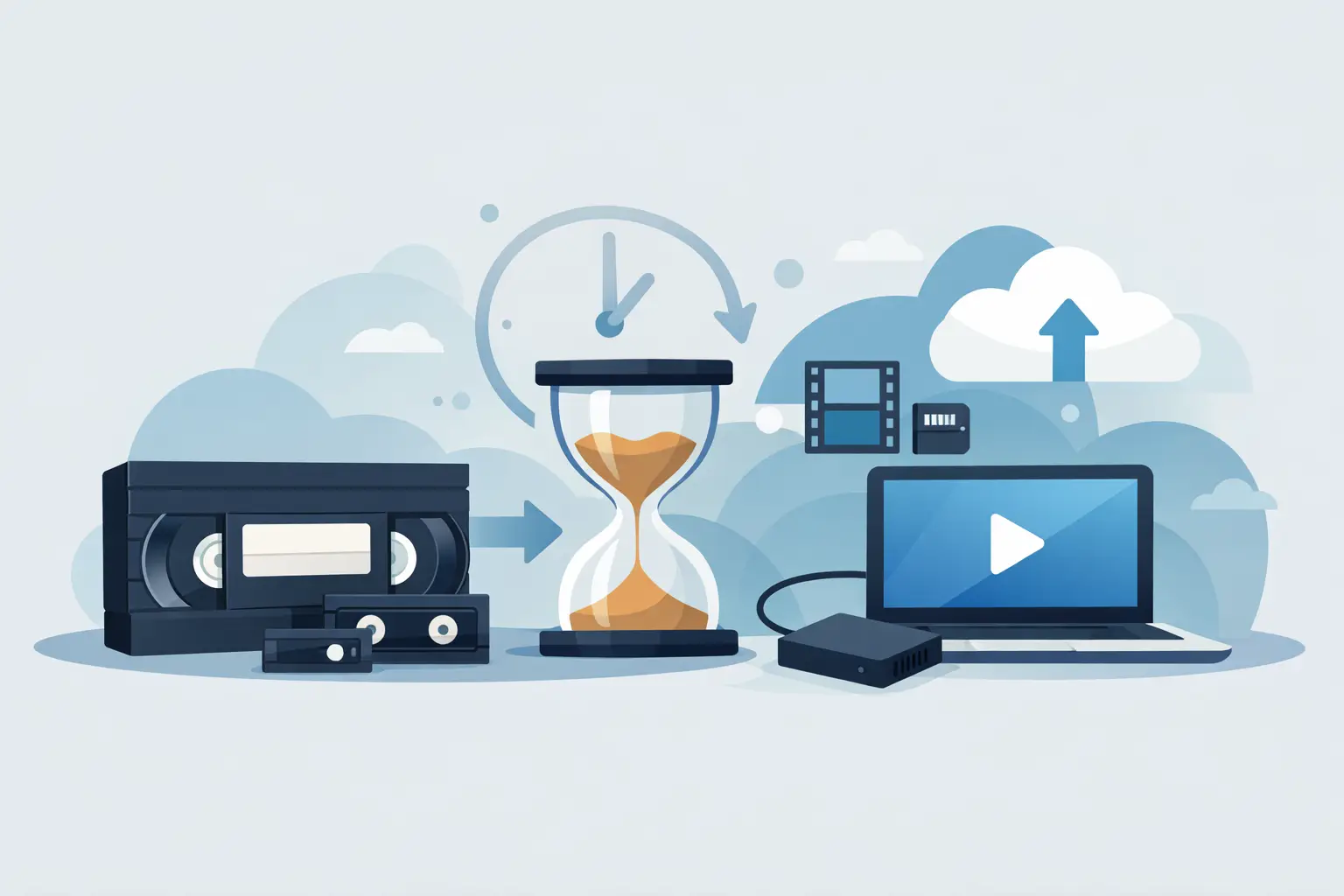
The short answer is that VHS conversion usually takes as long as the tape itself to play, plus additional time for setup, file processing, quality checks, and delivery. A two-hour VHS tape generally needs about two hours of real-time playback just to capture the footage. But your full order timeline can be anywhere from a few days to a few weeks depending on how many tapes you have, their condition, and whether any restoration is needed.
How long does it take to convert VHS to digital in real life?
VHS tapes have to be played back in real time. That is the biggest factor people don’t expect. Unlike copying digital files from one drive to another, analog videotape cannot simply be dragged and dropped. If a tape runs for 120 minutes, the machine has to play those 120 minutes while the video is captured into a digital format.
That means a single standard tape might take roughly the same amount of time as watching it. Then there is a little more time for preparing the tape, monitoring playback, naming files, exporting the finished video, and checking that the transfer completed properly.
For one tape, the process may sound simple. For a full family collection, it adds up quickly. Ten tapes that each run two hours can mean twenty hours of real-time capture before anyone even gets to final file organization and delivery. That is why turnaround is usually based on the total number of items in your order, not just one tape.
What affects how long VHS conversion takes?
Tape length is the most obvious variable, but it is not the only one. A short home-recorded tape may move through the process much faster than a long tape with damage, signal issues, or multiple recording segments.
Tape length and recording speed
VHS tapes were often recorded in different speeds, which affects how much material is actually on them. Some tapes contain two hours, while others may hold four, six, or even more if recorded at extended play settings. The tape may look identical on the outside, but the runtime inside can be very different.
That is why estimates based only on the label can be imperfect. A tape marked with a familiar brand and size does not always tell you exactly how long the content runs.
Number of tapes in the order
A single tape may be completed quickly, especially during a slower production period. A large family archive is another story. If you bring in twenty, fifty, or one hundred tapes, the overall project naturally takes longer because every tape needs individual handling.
Professional digitization is not just a batch copy job. Each item has to be queued, captured, reviewed, and prepared for final delivery. Larger orders are worth doing, but they usually require a more realistic schedule.
Tape condition
Condition can change everything. If a tape has mold, a broken shell, a snapped section, crinkled tape, playback instability, or years of dust buildup, it may need cleaning or repair before safe transfer is even possible.
That extra step protects both the tape and the playback equipment. It also helps avoid a failed capture halfway through an important recording. When a tape is fragile, careful handling matters more than speed.
Tracking issues and signal problems
Older home videos do not always play perfectly. There may be rolling lines, static, audio dropouts, or sections that need adjustment during playback. These issues can require more attention from a technician and may slow the process.
Sometimes the transfer still moves forward on the first pass. Other times the tape needs troubleshooting to get the best possible result. With old media, the fastest route is not always the safest one.
Output format and delivery needs
Most customers want digital files on a USB drive, hard drive, or cloud-ready format. That final stage is usually straightforward, but it still takes time to export, organize, and verify the files.
If you want DVDs made, multiple copies, custom file naming, or combined delivery formats, that can add to the final turnaround. None of this is unusual – it just means the timeline depends on more than the tape playback itself.
A realistic turnaround for professional VHS transfer
If you are asking how long does it take to convert VHS to digital through a professional service, the honest answer is that most orders fall somewhere between a few business days and a few weeks. Smaller, healthy tape orders may be finished sooner. Larger collections or tapes needing restoration may take longer.
A trustworthy provider should give you a clear estimate based on your actual order, not a one-size-fits-all promise. That is especially true when you are handing over original family media that cannot be replaced.
There is a difference between the transfer time for one tape and the turnaround time for your project. Transfer time refers to the real-time capture of the content. Turnaround time includes intake, queue time, cleaning or repair if needed, digitization, quality control, file preparation, and return delivery.
For families, that distinction matters. You are not just buying speed. You are paying for care, reliability, and the confidence that your originals are being handled properly.
Is faster always better?
Not when it comes to aging tapes.
A rushed VHS transfer can miss problems that should have been caught. Tapes can jam. Audio can drift. An unstable picture can go unchecked. If the goal is to keep memories alive for the next generation, quality control matters just as much as the calendar.
That does not mean the process should drag on without communication. It means a good service balances efficiency with attention. If a tape needs intervention, it is better to take the extra time than risk losing footage during playback.
This is one reason many families prefer working with an experienced digitization company rather than attempting it at home. Do-it-yourself transfer can work for some people, but it often turns into a longer project than expected. You need the right VCR, a capture device, software, storage space, and enough time to monitor playback. If the tape has issues, the process becomes even more frustrating.
When should you start the conversion process?
Sooner is better. VHS tapes do not improve with age. Magnetic media can degrade over time, and the equipment needed to play it is getting harder to find and maintain. Even if a tape plays today, there is no guarantee it will play just as well next year.
Many people wait until a birthday slideshow, memorial, anniversary, or holiday gathering is approaching. That can work, but it adds pressure. Starting earlier gives you more flexibility, especially if your collection includes damaged or unmarked tapes.
If your tapes have been stored in a garage, attic, or humid room, moving sooner is especially wise. Heat and moisture can shorten the window for successful recovery.
What to ask before handing over your tapes
The best way to understand timing is to ask a few simple questions. How is turnaround estimated? Is the process done in-house? What happens if a tape is damaged? Will the files be checked before delivery? Can they handle larger collections if you find more tapes later?
Clear answers tell you a lot. You want a service that respects both the technical side of preservation and the emotional weight of the material. At HB Media Solutions, that balance is part of the job. Families are not just dropping off old cassettes. They are trusting someone with moments that may exist nowhere else.
A careful provider will set expectations honestly. Some tapes move quickly. Others need patience. That is not a sign that something is wrong. It is often a sign that your memories are being handled the right way.
If you have been putting this off because the process feels uncertain, the timing question is a good place to start. Most VHS transfers take real time to capture, and most orders take longer than a single afternoon to complete. But once those recordings are safely digitized, they become easier to watch, share, and protect. That peace of mind usually lasts far longer than the wait.