That box of VHS tapes in the closet usually holds more than old footage. It holds birthday parties with voices you forgot, holiday mornings, school plays, and people who may not be here anymore. When you start comparing vhs transfer vs diy converter options, the real question is not just cost. It is how much risk you are comfortable taking with memories that cannot be recreated.
For some families, a do-it-yourself setup is good enough. For others, it turns into a frustrating weekend of bad cables, weak picture quality, and tapes that still are not safely preserved. The right choice depends on the condition of your tapes, your comfort with older equipment, and how important the final result feels to you.
VHS transfer vs DIY converter: what is the difference?
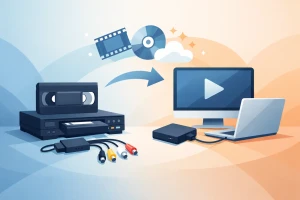
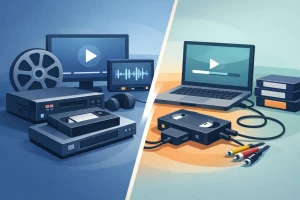
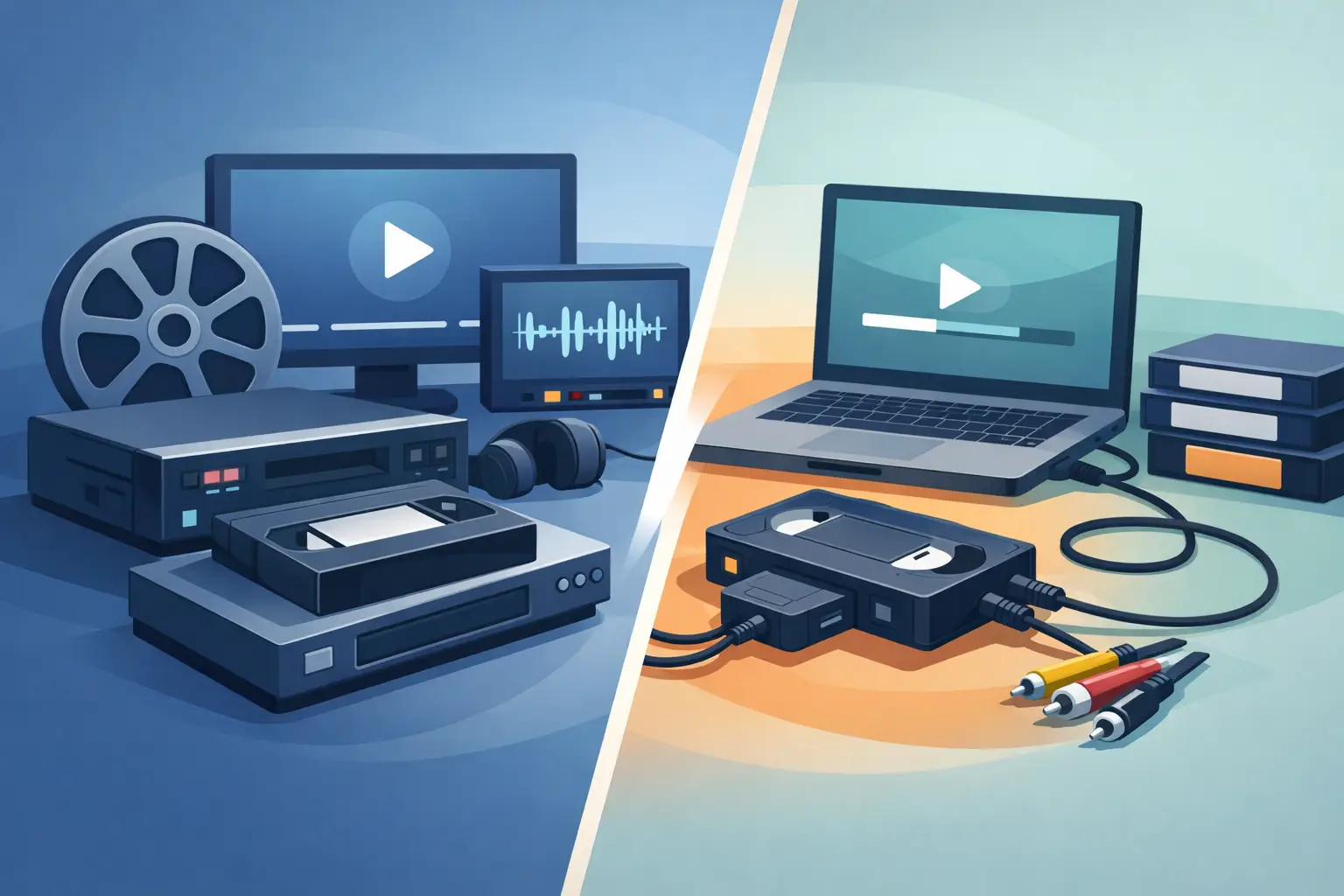
A DIY converter usually means you supply the VHS player, connect it to a capture device, and record the tape to a computer yourself. On paper, that sounds simple. In practice, you are relying on aging VCR hardware, software settings, computer compatibility, and the condition of each tape.
A professional VHS transfer service handles the full process for you. That often includes proper playback equipment, monitoring during capture, file conversion, and careful handling of tapes that may be old, delicate, or damaged. If a tape has tracking issues, mold, breakage, or other playback problems, a professional team is far better positioned to catch those issues before more damage happens.
That distinction matters because VHS is not a clean digital source. It is an aging analog format. Every part of the chain affects the final outcome.
When a DIY converter makes sense
If you are reasonably tech-savvy, already own a working VCR, and only have a small number of tapes, a DIY route can be practical. It may also work if the footage is casual and you are comfortable with a result that is decent rather than polished.
There is a certain appeal to doing it yourself. You control the process, you can test settings, and you may spend less upfront if everything works on the first try. For someone converting one or two tapes that are in good shape, it can be a perfectly acceptable project.
But that best-case scenario is doing a lot of work in that sentence. A working VCR is getting harder to find. Many capture devices overpromise and underdeliver. Some produce washed-out color, audio sync problems, dropped frames, or files that are harder to save and organize than expected. If your computer does not like the software or the device drivers are outdated, the project gets complicated fast.
DIY also asks for patience. A two-hour tape captures in real time. If you have ten tapes, that is not a quick evening task. It is a commitment.
Where DIY often falls short
The biggest problem with a DIY converter is not that it never works. It is that many people do not realize what they are missing until the transfer is finished.
Consumer-grade capture setups can struggle with unstable VHS signals. You may see jitter, color shifts, noise, or moments where the picture tears or wobbles. Audio can hum or drift out of sync. If the tape itself has aging issues, the converter does not fix that. It just records the problems.
There is also the risk to the originals. Old VHS tapes can be brittle, sticky, warped, or simply worn from years of storage. An unreliable VCR can chew tape, jam, or stop mid-playback. That is frustrating if the tape is replaceable. It is heartbreaking if it contains your wedding, a child’s first steps, or the last home video of a grandparent.
This is where many families realize the project is not really about gadgets. It is about protecting something irreplaceable.
Why professional VHS transfer is different
Professional transfer is usually less about fancy language and more about reducing avoidable loss. Better playback equipment, experience with old media, and close monitoring all improve the odds of getting the strongest possible result from an aging tape.
A good service knows that every tape behaves differently. Some play cleanly. Some need adjustment. Some need repair before they can even be safely transferred. That judgment comes from experience, not trial and error on a living room table.
There is also peace of mind in having a clear process. Instead of hunting down adapters and wondering whether your software saved the file correctly, you hand the tapes to people who do this every day. For many households, that simplicity is worth as much as the technical quality.
VHS transfer vs DIY converter: cost is only part of the story
It is easy to assume DIY is always cheaper. Sometimes it is. Sometimes it only looks cheaper at first.
A true DIY setup may require a working VCR, a converter device, software, storage space for large video files, and enough time to monitor each transfer. If the first device performs poorly, you may buy another. If your VCR fails, you may need a replacement. If a tape has trouble playing, you may still end up turning to a professional after already spending money.
A transfer service costs more upfront, but the value is in the outcome and the reduced risk. You are paying for equipment, expertise, handling, and time. If your tapes are important enough that you only want to do this once, the comparison changes.
That is especially true for larger collections. Once the tape count grows, DIY savings can disappear under the weight of hours spent capturing, renaming files, troubleshooting, and redoing failed transfers.
Quality expectations matter more than most people think
Some people just want to watch the footage on a phone or TV before the tapes degrade further. Others want the best version possible for long-term family archives. Those are different goals, and they should lead to different decisions.
If your goal is convenience and basic access, a DIY converter may be enough for a few tapes in decent condition. If your goal is preserving family history with consistent playback, stable image quality, and careful handling, professional transfer is the safer path.
It also helps to be realistic. No transfer can turn VHS into modern high-definition video. The source is still VHS. What a professional service can do is capture it properly, avoid common errors, and preserve as much of the original signal as possible without adding new problems.
That matters more than flashy promises.
The emotional side of the decision
People rarely search for VHS conversion because they are curious about cables. They do it because time is catching up with the tapes.
Magnetic media does not improve with age. Each year raises the chance of signal loss, binder breakdown, playback issues, and equipment failure. Waiting too long can narrow your options. That is why this decision deserves a little honesty.
If you would be upset by a damaged tape, poor transfer, or missing audio, DIY may not be worth the gamble. If the footage is low-stakes and you enjoy figuring things out, it might be. There is no shame in either answer. The key is matching the method to the value of the material.
For families across South Florida, especially those with shelves of older home videos and no working VCR in sight, professional help often removes the hardest part – getting started without fear of doing it wrong.
How to choose the right option for your tapes
Start with the condition and importance of the tapes. If they are family originals, older than a few decades, or showing signs of damage, lean toward professional transfer. If they are copies, short recordings, or easy to replace, DIY may be a reasonable experiment.
Next, consider your tolerance for troubleshooting. If the thought of testing connections, adjusting tracking, and managing large video files sounds exhausting, that is useful information. Convenience is not laziness. It is often the smarter choice when the media is valuable.
Finally, think beyond the transfer itself. Once the video is digitized, you still need to store it properly, back it up, and make sure your family can actually access it. A good transfer process should leave you with files that are simple to keep, share, and revisit.
At HB Media Solutions, that is the heart of the work: helping families protect recordings that matter before age and playback problems take the choice away.
The best option is the one that gets your tapes preserved safely, with a result you will feel good about years from now. If that means doing it yourself, go in with realistic expectations. If it means handing the job to experienced professionals, that is not taking the easy way out. It is choosing care over chance.