
The moment that tape goes into an old camcorder and the screen flickers to life, you are not just watching a wedding video. You are hearing voices that have changed, seeing relatives who may no longer be here, and revisiting a day your family still talks about. That is why the best way preserve wedding videotapes is not to keep waiting for the “right time.” It is to protect them now, before age and playback damage take that choice away.
Wedding tapes are especially vulnerable because many families stored them with good intentions but not always in ideal conditions. They ended up in garages, closets, attics, or under beds for twenty or thirty years. Even when a tape looks fine from the outside, the magnetic signal inside can weaken, the binder can break down, and the shell itself can warp or crack. By the time someone decides to watch it for an anniversary or a family gathering, the equipment is gone and the tape may already be at risk.
The best way to preserve wedding videotapes starts with digitizing
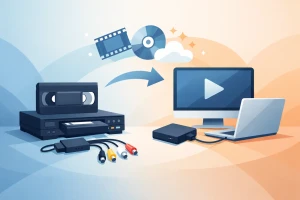
If your goal is to keep the memory, not just the object, digitization is the safest long-term move. Analog videotapes were never designed to last forever. They degrade slowly even when untouched, and they can degrade faster once people start trying old VCRs or camcorders to see what is still on them.
A digital copy gives you something a tape cannot. It lets you watch, share, back up, and protect the footage without repeated physical playback. That matters more than many people realize. Every time an aging tape is played, there is some level of mechanical stress. If the machine has dirty heads, worn rollers, or transport issues, one test playback can cause damage that cannot be reversed.
This is where families sometimes face a trade-off. They want to preserve the original tape because it feels meaningful, and they should. But preserving the original tape alone is not enough. The tape can still fail. The better approach is both: keep the original as an heirloom and create high-quality digital files so the memories remain accessible.
Why waiting is usually the biggest risk
People often assume that if a wedding videotape survived this long, it will survive a few more years. Sometimes that is true. Sometimes it is not. Magnetic media can decline unevenly. One tape may still play beautifully, while another from the same box has dropouts, tracking problems, or mold.
Environmental conditions make a big difference. Heat, humidity, dust, smoke exposure, and poor storage all accelerate deterioration. In Florida, humidity alone is a serious reason to act sooner rather than later. Tapes stored in a warm home, garage, or storage unit may be far more fragile than they appear.
There is also the equipment problem. Working VCRs and camcorders are harder to find, and many available machines have not been maintained properly. A failing deck can chew tape, stretch it, or create playback errors. So even if the tape itself is still recoverable, the wrong machine can turn a preservation project into a loss.
What a good preservation process should include
The best way to preserve wedding videotapes is not just “convert to digital” and call it done. Quality matters. Care matters. The handling process matters.
A proper preservation workflow starts with identifying the format. Many families say “videotape” when they actually mean VHS, VHS-C, Hi8, Digital8, MiniDV, or another camcorder format. Each one needs the right playback equipment and the right capture method. Guessing is where problems begin.
Next comes inspection. A tape may need cleaning, shell repair, respooling, or other stabilization before playback. This step is easy to overlook when someone tries a do-it-yourself approach, but it can make the difference between a successful transfer and a damaged original.
Then there is the actual transfer. Professional digitization uses calibrated equipment and stable capture methods to pull the best possible image and sound from aging media. That does not mean the footage will look brand new. A wedding recorded on consumer camcorder tape in the 1990s will still look like a 1990s camcorder recording. But a careful transfer can preserve what is there faithfully and often more reliably than a home setup.
Finally, the digital files need a smart delivery and storage plan. A single file on a single USB drive is better than nothing, but it is not enough for long-term peace of mind.
The file is the memory you can actually keep using
Once the footage is digitized, the next question is where it lives. This part matters because digital preservation is only as strong as the backup strategy behind it.
A practical approach is to keep at least two to three copies in different places. One may live on a USB drive or external hard drive at home. Another can be stored in a cloud account. A third might be given to an adult child or trusted family member. If one copy fails, the wedding video is still safe.
This is one area where simple habits beat complicated systems. If a file is easy to find and easy to duplicate, it is more likely to stay protected. Label folders clearly with names and dates. If there are multiple tapes, organize them in order, such as ceremony, reception, and candid footage.
Is it worth keeping the original wedding tapes too?
Yes, in most cases. After digitization, the original tapes still have sentimental and archival value. They are part of the family record, and some people find comfort in keeping the physical media alongside digital copies.
That said, originals should be stored properly. Keep them upright in a cool, dry, indoor space away from sunlight and humidity. Avoid attics, garages, sheds, and basements with moisture issues. Do not stack heavy items on them. Do not keep replaying them just because you now have access to a machine.
Think of the original tape as the artifact and the digital file as the access copy. One preserves the object. The other preserves the experience of being able to watch it.
DIY vs. professional transfer
A lot of families wonder whether they should handle the transfer themselves. The honest answer is that it depends on the condition of the tapes, the format, and your comfort level.
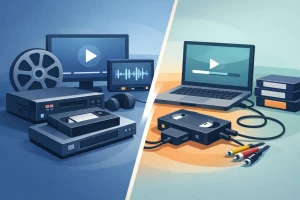
If you have a tape in a common format, a working playback machine in good condition, and the patience to learn capture software, DIY can work. But there are trade-offs. Home setups often introduce tracking issues, dropped frames, poor audio sync, or weak file organization. More importantly, many people do not know whether the machine they found online is safe to use on an irreplaceable tape.
Professional transfer makes the most sense when the footage is emotionally significant, the tape shows signs of age, the format is uncommon, or you simply do not want to gamble with a once-in-a-lifetime recording. Wedding videos usually check every one of those boxes. This is not just another old tape from a TV recording. It is the ceremony, the vows, the toasts, and the people who made the day what it was.
That is why many families choose an experienced preservation service with the right equipment and careful handling practices. For people in South Florida, working with a local provider can also add peace of mind because you know where your media is going and who is responsible for it.
Best way preserve wedding videotapes without losing quality
If you are searching for the best way preserve wedding videotapes without adding more risk, the safest path is straightforward. Have the tapes inspected, transferred on proper equipment, and delivered as digital files you can back up immediately. Then store the originals carefully and stop relying on them for routine viewing.
The goal is not perfection. The goal is preservation. Older footage may include soft focus, tape noise, or color shifts that were part of the original recording. A trustworthy transfer respects the source while protecting it from further loss.
If your tapes include damage, do not assume they are beyond hope. Many can still be recovered, depending on the issue. Mold, broken shells, and tangled sections need special handling, but they do not always mean the memories are gone.
HB Media Solutions has worked with families who thought they had waited too long, only to discover that the wedding footage was still there and still worth saving. That kind of outcome starts with acting before one more hot season, one more move, or one more risky playback attempt makes recovery harder.
A wedding video is one of those rare family keepsakes that grows more meaningful with time. The best day to preserve it was years ago. The next best day is now.